
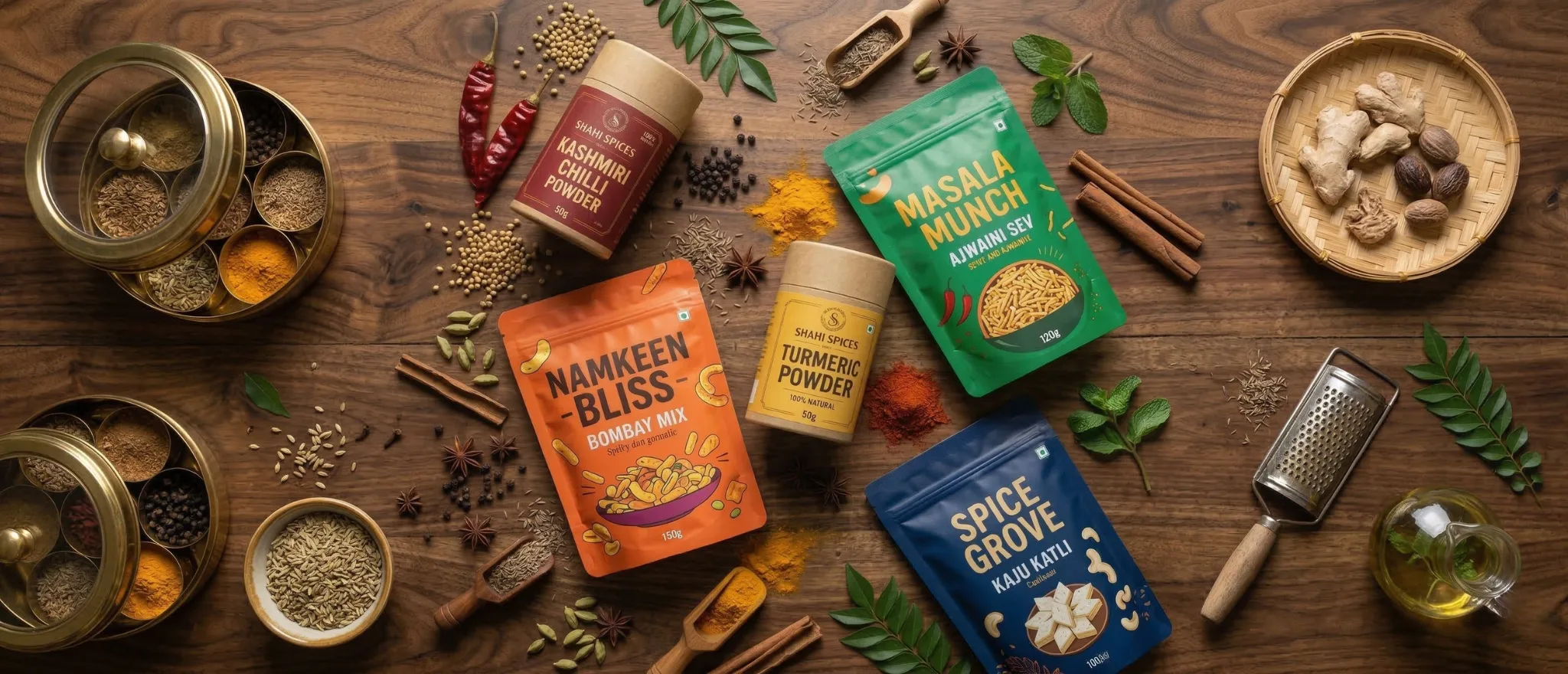
Rebranding Your Spice or Namkeen Business: The Strategy That Doubles Shelf Value
March 17, 2026India’s Spice and Namkeen Industry Is Sitting on a Branding Gold Mine
India is the world’s largest producer and consumer of spices. Gujarat and Maharashtra alone account for a massive share of the country’s namkeen and snack production. These are industries built on centuries of tradition, incredible product quality, and family recipes that have passed down through generations.
And yet, walk into any modern grocery chain in Ahmedabad, Mumbai, or Bengaluru or browse the Indian grocery shelves in Dubai, Oman, or Singapore and you will find most of these products packaged exactly as they were twenty years ago. While the product inside is world class, the packaging says: we have not changed. We are not premium. We are just another option on the shelf.
This is the branding gold mine that most spice and namkeen businesses are sitting on and almost none are extracting. The ones that do rebrand strategically are transforming their revenue, their market reach, and their ability to command significantly higher prices.
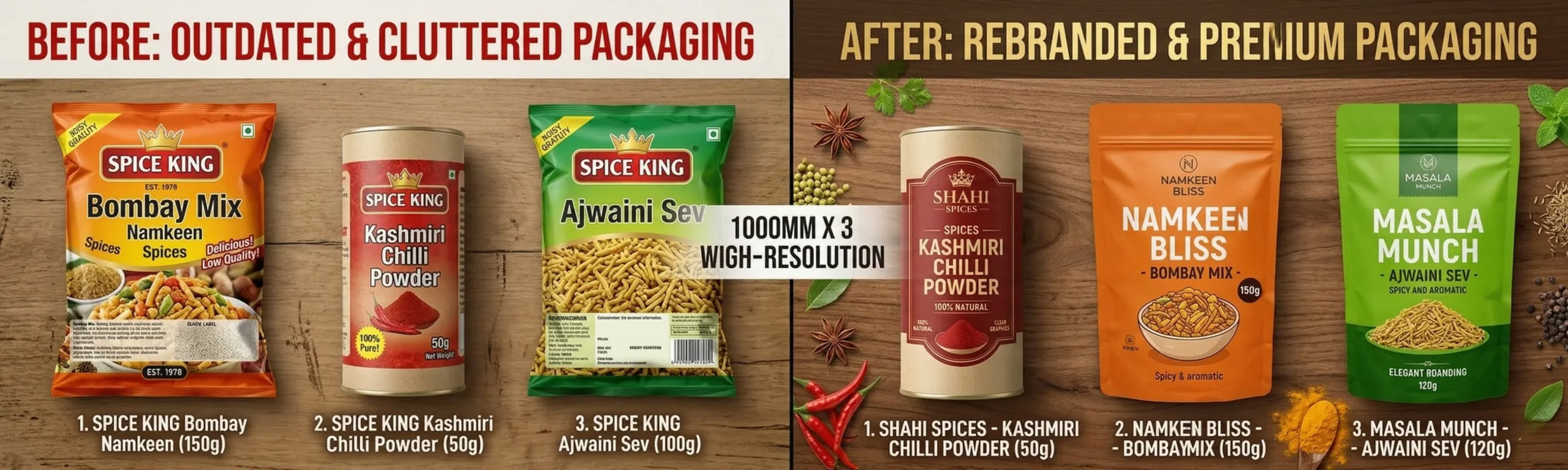
1. Why Rebranding a Traditional Food Brand Feels Risky and Why It Is Not
The number one fear that business owners in the spice and namkeen space have about rebranding is: will my existing customers still recognize me? Will I lose the trust I have built over years?
This fear is understandable but, in most cases, unfounded. Strategic rebranding is not about erasing your identity. It is about evolving it retaining your core brand equity while elevating the presentation to meet the expectations of today’s consumer.
Well-executed food brand rebrandings retain and often grow their existing customer base, because the customers see the brand they trust now presented in a way that makes them feel proud to buy it. They perceive the quality they already knew was there, now confirmed visually.
2. The Spice Brand Rebrand Framework: Five Non Negotiables
a) Retain the Core Evolve the Expression
If your brand has a name, color, or element with strong consumer recognition, that is your equity. It must be preserved and refined, not discarded. The rebrand evolves around this equity, elevating everything else while the core remains recognizable.
b) Category Credibility First
Spice and namkeen packaging must first pass the category test it must be instantly recognizable as a food product in its category. This means using category appropriate color signals (warm reds, oranges, and golds for namkeen; vibrant earthy tones for spices) while still standing out within those norms.
c) Appetite Appeal Is Non Negotiable
For food brands, the packaging must make you hungry. Photography, illustration, or color whichever route you choose must trigger appetite before any other response. This is a science, not a preference, and it requires working with brand designers who specialize in food category design.
d) Build a Cohesive Product Family
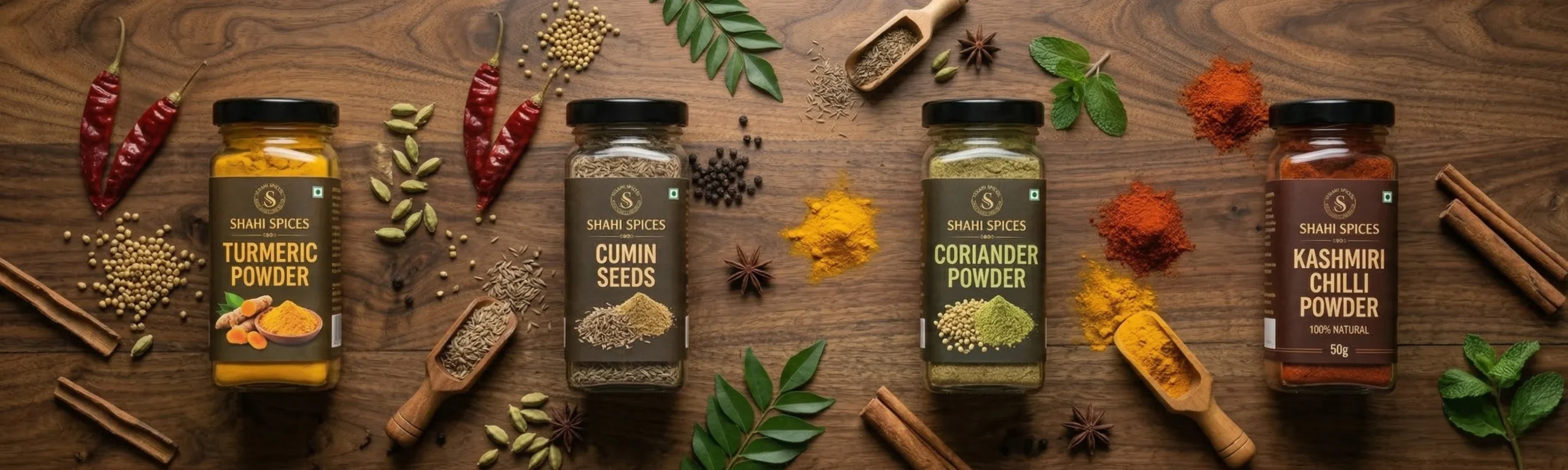
One of the biggest visual weaknesses of traditional Indian spice and namkeen brands is inconsistency across variants. The chilli powder pack looks nothing like the coriander pack. The plain namkeen looks nothing like the masala variant. Premium brands have strong visual architecture a design system where every variant is instantly part of the same family.
e) Design for Modern Retail AND Traditional Trade
Your rebrand must work in the modern trade context organized retail, premium supermarkets, Ecommerce while also working in the traditional trade channels kirana stores, wholesale distributors, local mandis. These are very different visual environments, and a strong packaging design must succeed in both.
3. Case for Premium Pricing: How Packaging Justifies Higher Price Points
One of the most direct and measurable benefits of a strategic spice or namkeen rebrand is the ability to reprice upward. When your product looks premium, you can charge a premium price and consumers will pay it because their perception of quality has shifted to match the visual signals.
This is not manipulation. This is alignment. If your product quality is genuinely strong and in most cases it is your packaging should communicate that quality. When the packaging matches the product quality, charging the right price becomes a conversation between equals.
- Modern trade retailers accept higher MRP products more readily when packaging is premium
- E-commerce listings with high quality packaging photography convert at significantly higher rates
- Export markets UAE, Singapore, Australia require premium packaging as a baseline expectation
- Premium packaging enables brand-building at the consumer level, not just distribution level sell in
4. Exporting Your Spice Brand: What Dubai and Singapore Demand
For Gujarat and Maharashtra-based spice and namkeen businesses eyeing the Gulf and Southeast Asian export markets, packaging is the single biggest barrier to entry in premium retail. The UAE’s Spinneys, Carrefour, and Lulu group have high packaging standards. Singapore’s NTUC FairPrice and Cold Storage have specific requirements.
The Indian diaspora in these markets wants authentic Indian products they are not looking for Indianness to be toned down. But they do expect the packaging to meet the visual standards of the international retail environment around them. This is the gap that a strategic rebrand fills.
5. The Richest Branding Approach to Food Brand Rebranding
When we rebrand a spice or namkeen business at Richest Branding, we start by understanding the business deeply the founder’s story, the product’s heritage, the regional roots, the consumer’s relationship with the brand. These are not just background details. They are the brand’s most valuable raw material.
From there, we build a brand strategy document that defines positioning, tone of voice, and visual direction. Only then does design begin. The result is not just beautiful packaging it is a complete brand system that can grow with the business, enter new markets, launch new product lines, and build consumer loyalty that no competitor can easily replicate.
Because a namkeen brand is not just selling snacks. A spice brand is not just selling powder. They are selling taste memories, cultural connection, and the reassurance of something real and trusted in a world of choices. When that story is told through world-class branding and packaging, it does not just sell it builds an empire.
Ready to Build a Brand That Builds Empires?
Strategy • Design • Impact
www.richestbranding.com | info@richestbranding.com
Richest Branding — Strategic Branding that Builds Empires

