
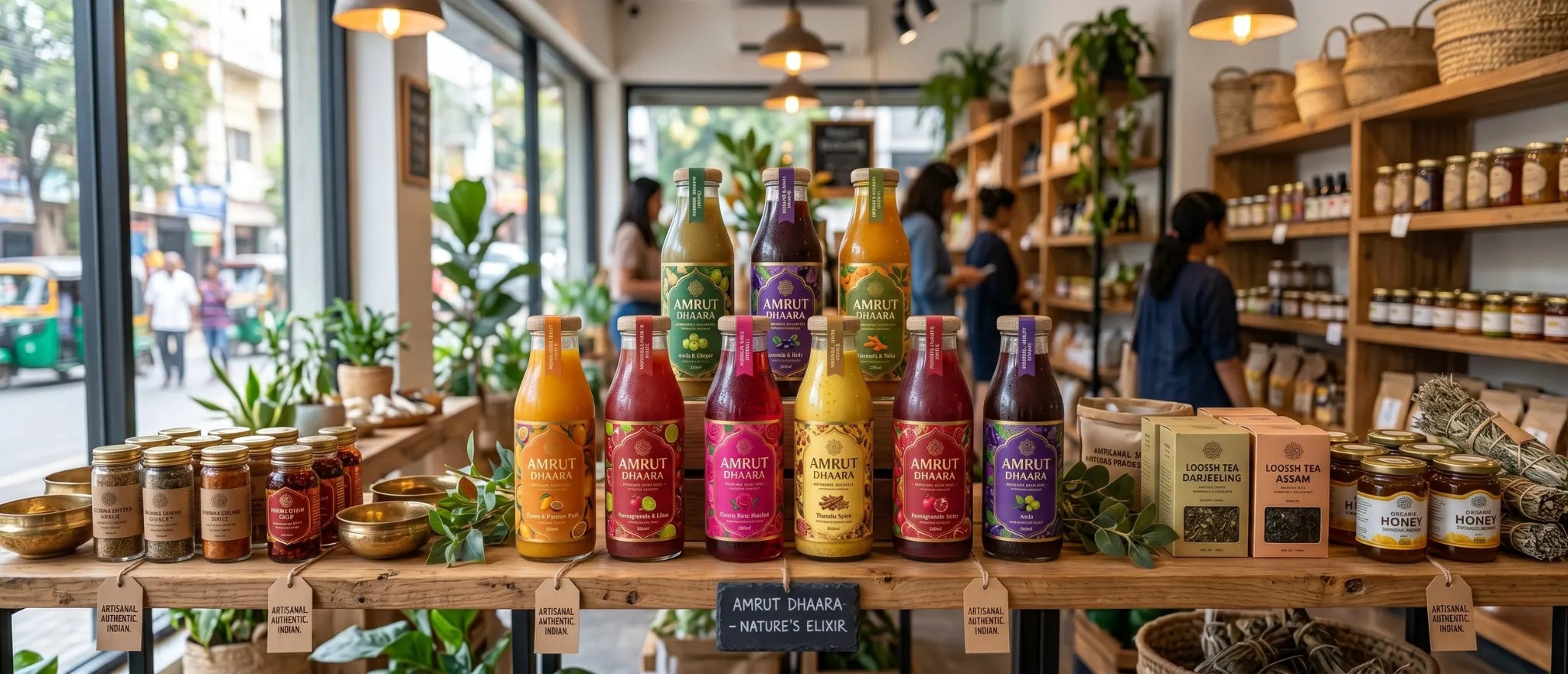
Pour It Right: How Indian Beverage Brands Build Packaging That Commands Premium and Drives Repeat Purchase
April 15, 2026Pour It Right: How Indian Beverage Brands Build Packaging That Commands Premium and Drives Repeat Purchase
India’s beverage market is at an extraordinary inflection point. The era of two or three nationally dominant brands owning the entire non alcoholic beverage category is over. Consumer interest in functional beverages, traditional Indian drinks modernised for contemporary consumption, and premium juice and health drink formats is creating category white space at a rate that did not exist five years ago.
Brands are being built in this white space right now. Some will build genuine market positions and sustained consumer loyalty. Others will launch, achieve a burst of initial distribution, and disappear from shelves within 24 months.
The difference between these two trajectories is rarely the product. India produces extraordinary beverages from the finest mango pulp to traditional sharbats to modern functional drinks. The difference is almost always the brand and at the most immediate level, the packaging.
The Beverage Packaging Hierarchy of Jobs
Unlike many FMCG categories, beverage packaging must perform a wider range of simultaneous jobs. It is a container that must maintain product integrity. It is a communication vehicle at the retail point of purchase. It is a brand expression vehicle in the hand of the consumer on restaurant tables, in offices, in social media photographs. And increasingly, it is a sustainability signal.
World class beverage packaging design addresses all of these jobs in a coherent and prioritised way, rather than solving for one and ignoring the others.
The Beverage Format Decision: Before the Design Brief
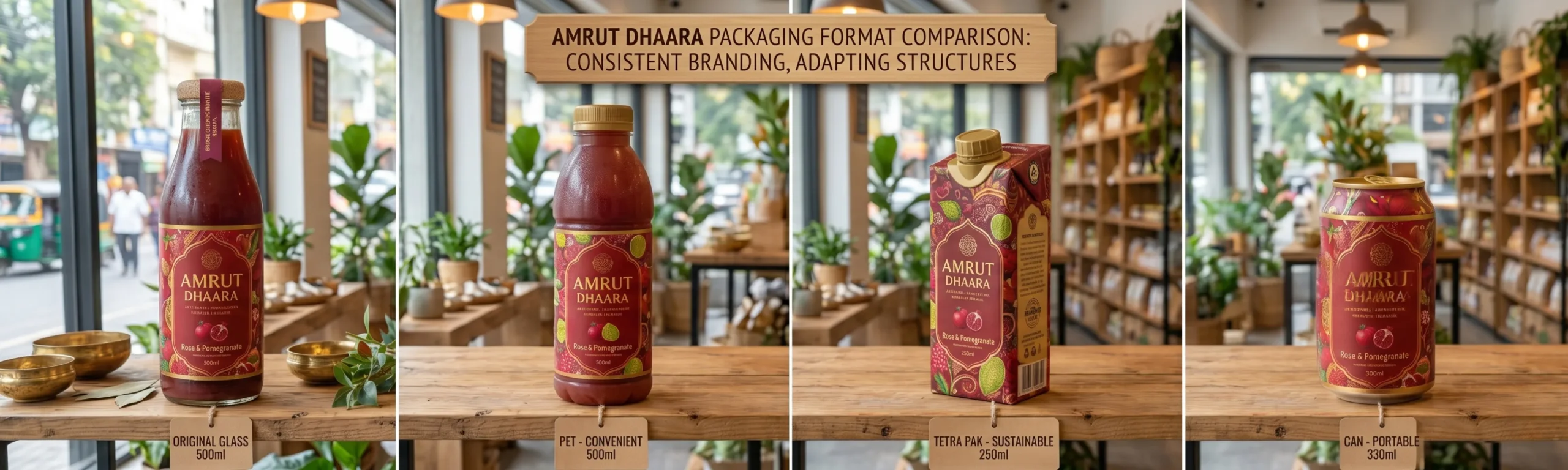
Glass vs PET vs Can vs Carton
The packaging format is the first and most significant brand positioning decision in beverage launch. Each format communicates a price tier and a consumption occasion before the label is read.
Glass communicates premium without exception it is the format of choice for premium juice brands, craft beverages, and any product that wants to signal quality through container quality. It commands a higher price point, restricts distribution to modern trade and premium outlets, but builds brand perception that no other format achieves.
PET plastic enables the widest distribution reach and the lowest cost structure, but communicates mass market by default. Premium PET packaging through label quality, structured bottle design, and premium closure can signal a step above mass market, but cannot fully escape the perception ceiling that the material itself imposes.
Aluminium cans communicate energy, modernity, and ready to consume convenience and in India’s growing energy and functional drinks space, they are the format of choice for the target consumer segment that space is built to reach.
Label vs Shrink Sleeve vs Direct Print
Beyond the container, the decoration method paper or film label, shrink sleeve, or direct print is the second format decision with significant brand implications. Shrink sleeves allow 360 degree graphic coverage and work particularly well for premium juice and functional drink formats where vibrant full coverage design communicates premium differentiation. Paper labels on glass bottles communicate artisan and craft positioning.
The Indian Functional Beverage and Traditional Drink Opportunity
The category creating the most exciting brand building opportunities in Indian beverages right now is the intersection of traditional Indian beverages and contemporary functional drink positioning. Aam panna as a digestive health drink. Kokum sharbat as a natural cooling and gut health beverage. Thandai as a festive and adaptogenic drink. Nannari as a regional craft beverage with genuine heritage.
These are not just products — they are brand stories with five hundred years of consumer validation behind them. The brand builder’s job is to translate that heritage into a contemporary beverage brand identity that the modern Indian consumer and the Indian diaspora consumer in Dubai, Oman, and Singapore can choose with pride and confidence.
- The traditional Indian beverage heritage is the most differentiated story available in the non alcoholic drinks category globally right now
- Premium positioning requires premium packaging: glass or premium PET, professional label design, clear functional benefit communication
- Export readiness demands regulatory compliance built into the original design not retrofitted for each market separately
- Social media shareability is a product brief requirement for premium beverage brands if it does not photograph beautifully, reconsider the packaging
- The 500ml single serve glass bottle format is the most powerful premium statement available in Indian beverage retail today
What Makes a Beverage Label Win on the Shelf
In the beverage aisle, the consumer is making purchase decisions at eye level, at refrigerator door level, and from the overhead angle at the back of a shelf. The label must work in all three contexts.
The key label design elements that drive beverage purchase: a dominant brand name that is visible from 1.5 metres. A clear flavour or variant communication. An appetite appeal visual the fruit, the ingredient, the finished poured product that triggers immediate desire. And a quality signal material, finish, typography that justifies the price before the price is read.
India’s beverage category is being reinvented. The brands that build the right packaging foundation now will be the category leaders that the next generation of Indian consumers grows up with.
Ready to build a brand that commands your market?
Visit richestbranding.com | info@richestbranding.com

