
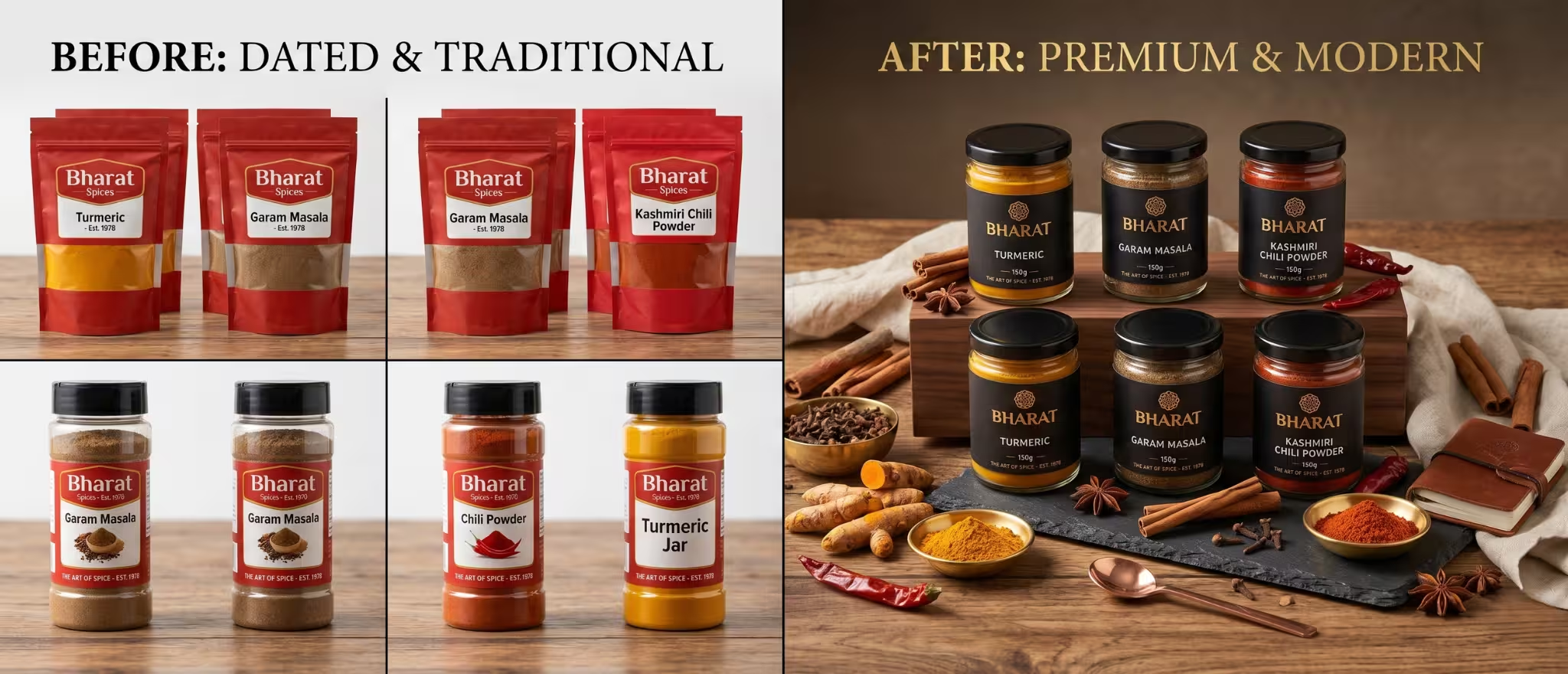
When Your Spice Brand Outgrows Its Packaging: The Complete Rebranding Playbook for Indian Masala Businesses
May 14, 2026When Your Spice Brand Outgrows Its Packaging: The Complete Rebranding Playbook for Indian Masala Businesses
There is a moment every successful spice business reaches. The product quality has been refined over years, sometimes over generations. The customer base is loyal and growing. Distribution has expanded from local markets to regional modern trade. Perhaps export enquiries have begun arriving from Dubai or the UK.
And then the business owner looks at the packaging the same packaging that has been in use for a decade or more and sees the gap. The packaging that made sense when the brand was selling at a local mandi no longer communicates what the brand has become. It no longer represents the quality of what is inside. It no longer signals the price point the business wants to command. And it most certainly will not open the doors of Lulu Hypermarket in Dubai or Waitrose in the UK.
This is the rebranding moment. And how the business navigates it determines whether the next decade of growth is built on a brand foundation strong enough to support it.
The Fear That Holds Most Spice Brands Back from Rebranding
The most common reason spice businesses delay rebranding sometimes for far too long is the fear of losing existing customers. The reasoning is understandable: loyal customers recognise the current packaging. If the packaging changes too dramatically, they may not find the brand on the shelf. The business that has been built over years could be disrupted.
This fear is real but it is also, in most cases, overestimated. Consumer research across FMCG rebranding consistently shows that loyal customers adapt to packaging changes far more readily than brand owners expect particularly when the change is executed with continuity principles: retaining the brand name in the same prominent position, maintaining the core colour signals that category shoppers use for navigation, and communicating the change through a brief transition period.
The greater risk, in most cases, is not the short term disruption of rebranding. It is the long term cost of not rebranding the premium pricing that cannot be commanded, the modern trade listings that cannot be secured, the export markets that cannot be entered, and the brand equity that cannot be built on a visual foundation that communicates yesterday’s version of the business.
The Four Triggers That Tell You It Is Time to Rebrand
Trigger One: Modern Trade Ambition
If your spice brand is seeking listings in organised retail D Mart, Reliance Smart, Star Bazaar, Big Bazaar, or any major regional supermarket chain your packaging will be evaluated against the visual standard set by the brands already on those shelves. Category buyers in organised retail make listing decisions partly on the visual quality of the packaging. Packaging that looks like it belongs in a street market will not win a premium aisle slot in a modern supermarket.
Trigger Two: Export Market Entry
The decision to enter the UAE, UK, Australian, or Singapore market makes rebranding essentially non negotiable. These markets have visual packaging standards that are set by the international brands competing for the same shelf positions. An Indian spice brand entering these markets with packaging designed for the domestic general trade market will not pass the first evaluation by a retail buyer in those markets.
Export rebranding is not about abandoning Indian identity. The most successful Indian spice brands in the Gulf and UK markets lead with Indian heritage but they express it in a visual language that international consumers find both recognisable and aspirational.
Trigger Three: Premium SKU Launch
When a spice business wants to launch a premium product line single origin spices, reserve blends, chef grade masalas at two or three times the standard price point the existing packaging system cannot carry the new positioning. Premium products require premium packaging. Launching a premium product in standard packaging creates a price to pack mismatch that the consumer resolves by downgrading their perception of the product.
Trigger Four: Generational Transition
When the second or third generation of a family spice business takes over, rebranding is often both a business decision and a cultural one. The new generation wants to honour what their parents or grandparents built while positioning the brand for the next chapter of growth. A well executed generational rebranding preserves the equity of the founding story while expressing a new visual ambition for the next decade.
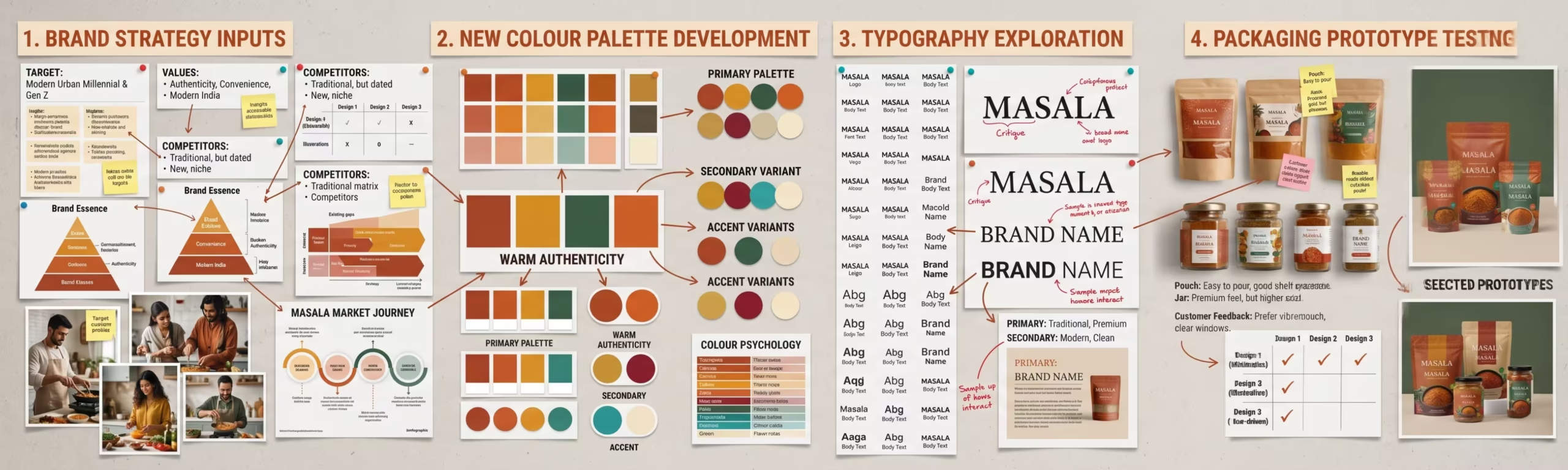
The Rebranding Process: What to Protect and What to Evolve
A successful spice brand rebranding is not a blank sheet of paper exercise. It is a precision balance between protecting the elements that carry existing consumer recognition the brand name, the dominant colour family, the overall category positioning and evolving the elements that are limiting growth.
- Protect: the brand name in its familiar form this is the primary recognition anchor for existing customers
- Protect: the dominant colour signals used by category shoppers to navigate the range sudden colour change loses shelf navigation
- Evolve: the overall visual quality and finish materials, photography, typography system, hierarchy and layout
- Evolve: the back panel from a compliance exercise to a brand storytelling opportunity provenance, recipe, heritage
- Add: a coherent range architecture if one does not currently exist visual family logic across all SKUs
The spice businesses that have most successfully made this transition both in India and internationally share one approach: they did not design a new pack. They built a brand system. The difference is the difference between a cosmetic change and a strategic transformation.
Your masala has been perfecting its formula for years. The brand deserves to be as refined as the recipe.
Ready to build a brand that commands your market?
Visit richestbranding.com | info@richestbranding.com

