From Loom to Luxury: How Surat and Ahmedabad’s Textile Businesses Build Fashion Brands That Win Global Retail
Surat produces over 30 million metres of fabric every single day. Ahmedabad’s textile history stretches back centuries it was once called the Manchester of the East, and for very good reason. Gujarat’s textile ecosystem is one of the largest and most sophisticated manufacturing operations on the planet.
And yet when you walk into a premium fashion boutique in Dubai, London, or Frankfurt, the brands on the rack are rarely Indian-owned. The fabric may be Indian. The embroidery may be Indian. The craftsmanship may be entirely Indian. The brand is not.
This is not a manufacturing gap. It is a brand gap. And it is one of the most significant and most correctable competitive opportunities in India’s entire industrial landscape.
The Manufacturer-to-Brand Transition: Why It Is Hard and Why It Is Worth It
The textile manufacturer to brand transition is difficult and the difficulty is real, not imagined. Manufacturers are optimised for production efficiency, volume throughput, and buyer relationship management. Brands require a completely different organisational capability: understanding end consumer psychology, building visual and verbal identity systems, managing retail relationships, and investing in marketing infrastructure before revenue validates that investment.
The difficulty is real. So is the prize.
A metre of Surat silk supplied to a European fashion house generates a specific revenue per metre. The same silk, sold under a well-constructed Indian luxury brand with distribution in Dubai’s Mall of the Emirates, can generate multiples of that revenue. The fabric is identical. The brand is capturing the margin the fabric alone cannot.
The Three Stages of Textile Brand Building
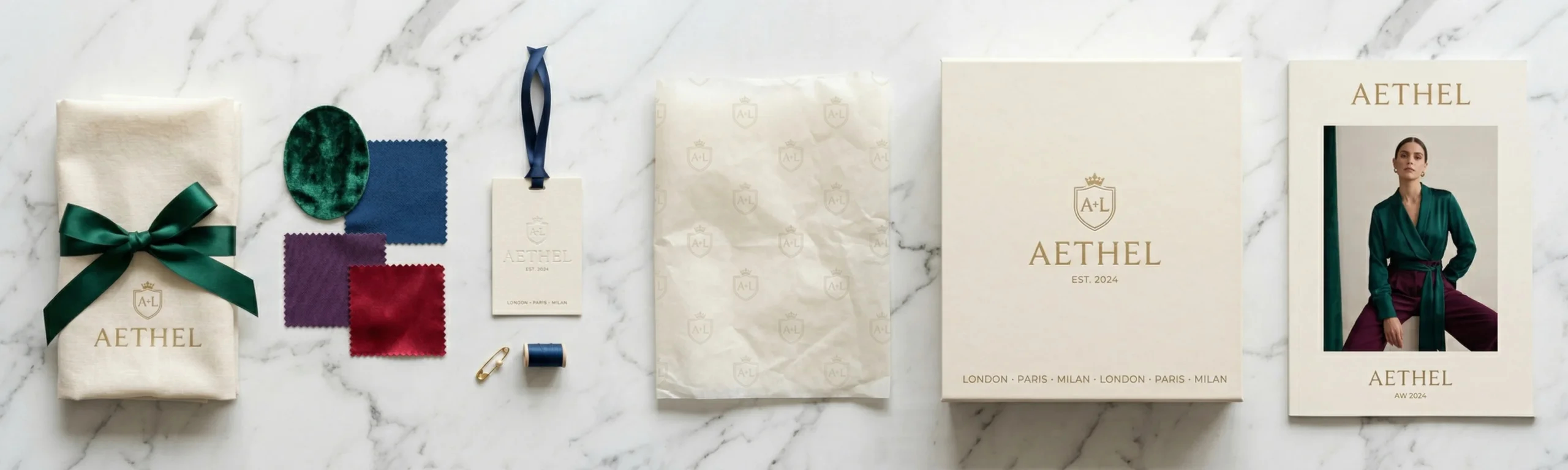
Stage One: Identity Before Product Range
The most common mistake textile businesses make when transitioning to brand ownership is leading with the product range. They have 400 SKUs and want a brand that covers all of them. The result is a brand that says nothing specific about anything.
The brands that successfully make this transition start with identity before they define the product range. They answer the foundational questions first: Who is this brand for? What does it stand for aesthetically and ethically? What is the one thing this brand does better than anyone else? What is the price point it will own, and is the product range consistent with that price point?
Only once these questions are answered can the visual identity — the logo, the colour palette, the typography, the photography language — be built in a way that is coherent and defensible.
Stage Two: The Physical Brand System
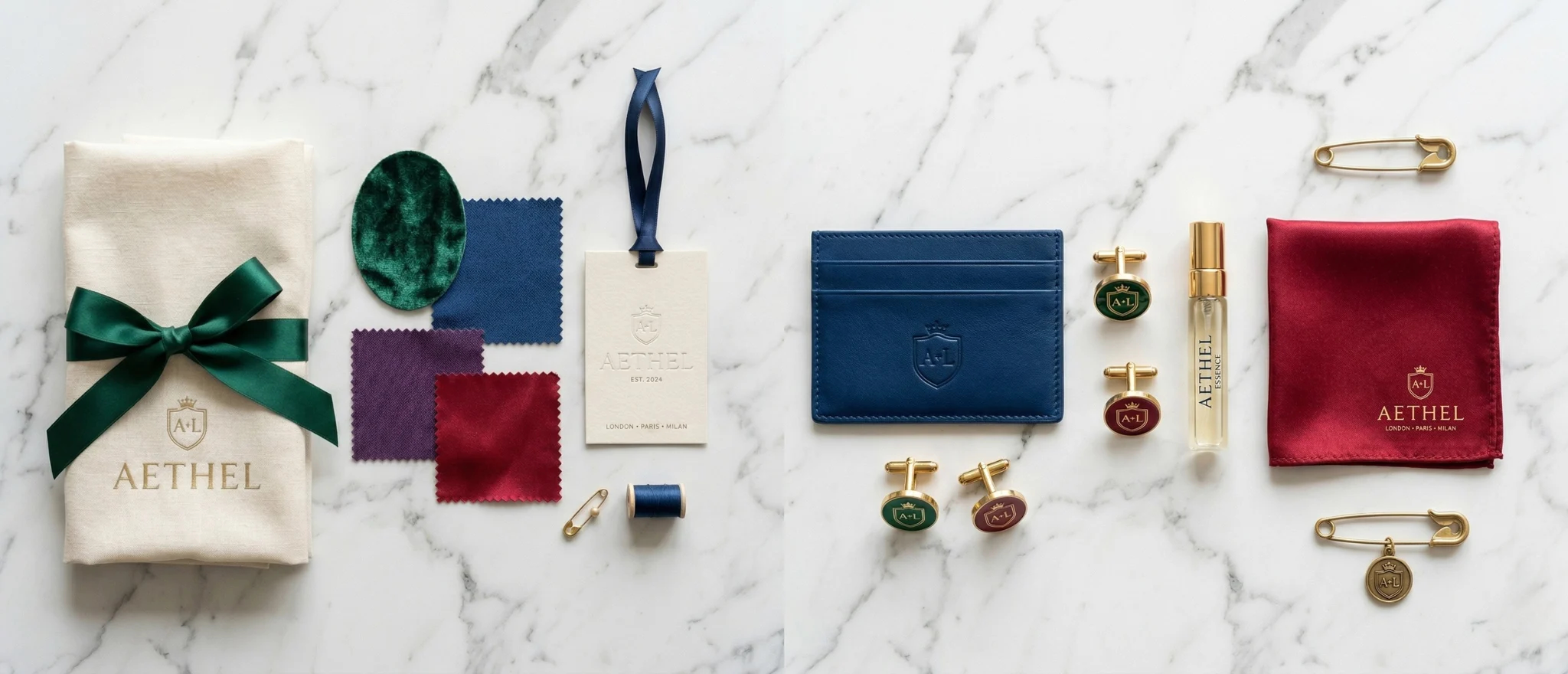
In fashion, every physical touchpoint is a brand decision. The hangtag its weight, its design, its typography communicates price point before the price is read. The garment bag communicates care and intentionality. The tissue paper inside the packaging communicates premium before the product is revealed.
Indian fashion brands entering premium retail in Dubai and Europe are often evaluated on these physical touchpoints before any garment is examined. The physical brand system must be built to the standard the market you are targeting expects.
Stage Three: The Digital Brand Presence
For fashion brands entering international markets, the digital presence is the showroom. Instagram is the primary discovery channel for premium fashion globally. A fashion brand’s Instagram feed is a curated visual essay on the aesthetic world it inhabits the styling, the photography, the models, the environments, the colour narrative.
Indian textile brands entering the UAE, UK, or German market must invest in photography and content creation that sits comfortably in the visual context of the premium fashion brands they want to be discovered alongside.
The Indian Textile Brand Story the World Is Ready For
There is a specific moment happening in global fashion right now that Indian textile brands are uniquely positioned to capture. Post-pandemic, premium fashion consumers are actively seeking brands with genuine provenance, authentic craft heritage, and sustainable production stories.
Bandhani from Kutch. Ikat from Pochampally. Block print from Bagru. Chanderi from Madhya Pradesh. Banarasi silk from Varanasi. These are not just fabric categories they are living craft traditions with centuries of refinement behind them. And the global premium fashion consumer is paying significant prices for exactly this kind of authenticated provenance.
- Craft provenance stories the weaver’s name, the village, the technique’s history are priceable at premium in today’s global fashion market
- Sustainability credentials built into the brand narrative natural dyes, traditional processes, artisan employment resonate powerfully with European buyers
- Limited edition positioning around craft collections commands significantly higher margins than volume production
- Direct-to-consumer digital channels reduce dependence on buyers and distributors who capture margin that should belong to the brand
- Collaboration with Indian fashion designers gives textile brands credibility and editorial visibility they cannot build alone
Surat and Ahmedabad’s textile sector has the production capability, the craft heritage, and the entrepreneurial energy to build Indian fashion brands that compete in the world’s most premium retail environments.
The missing layer is brand strategy the structured, researched, and design-executed system that transforms a product into something a consumer chooses not because it is available, but because it represents something they want to be associated with.
Ready to build a brand that commands your market?
Visit richestbranding.com | info@richestbranding.com