
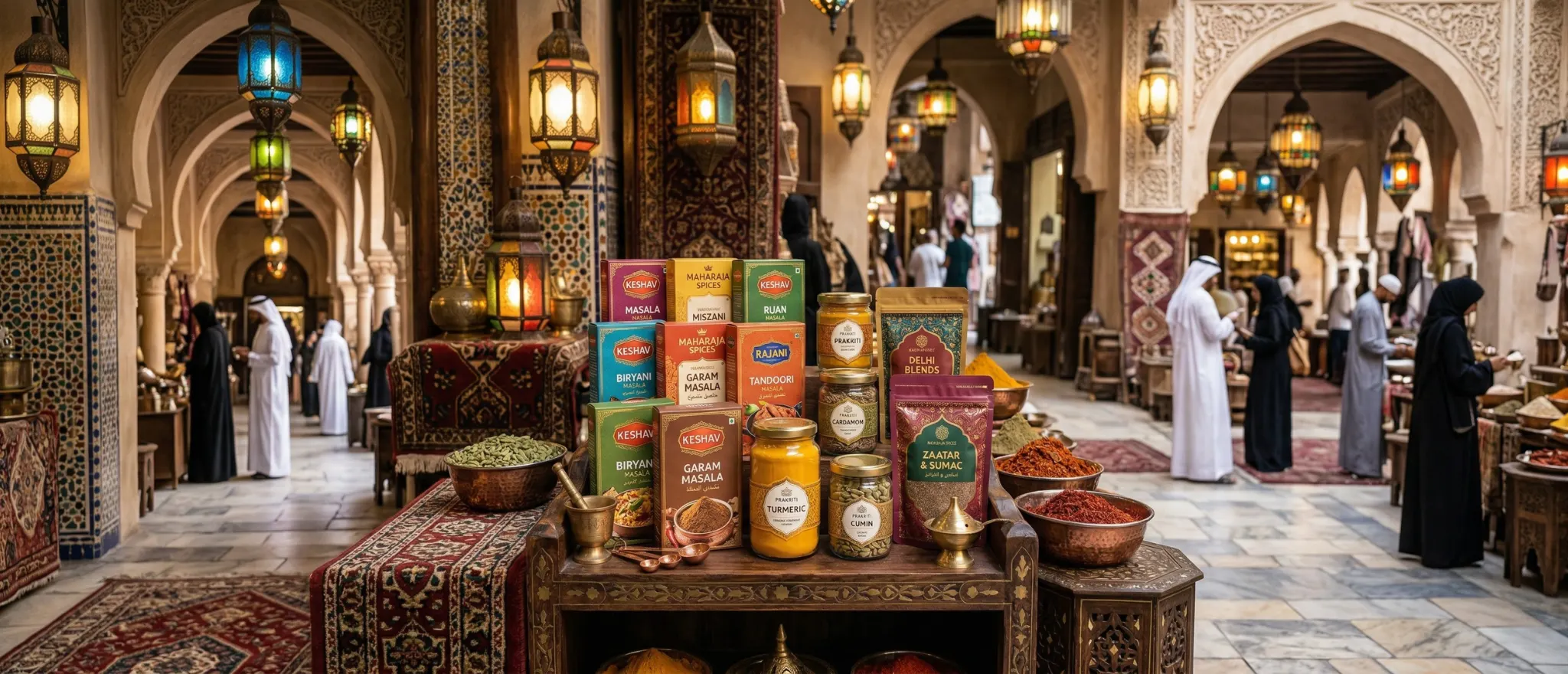
Selling Spice to the World: How Indian Masala Brands Build Empires in Saudi Arabia and UAE
April 6, 2026The Middle East Craves Indian Spice. Does Your Brand Know How to Speak to It?
Saudi Arabia and the UAE are among the most significant markets in the world for Indian spices. The love of Indian cuisine across the Gulf from South Asian expat communities to Arab households who have woven Indian flavours into their everyday cooking creates a demand environment that is both enormous and growing.
And yet, most Indian spice brands operating in these markets are capturing only a fraction of the available value. They are present in the spice aisles of hypermarkets, in the Indian grocery stores of Riyadh, Jeddah, Dubai, and Abu Dhabi but they are present as commodities, not as brands. Bought because they are available, not because they are chosen.
The difference between a commodity spice brand and a premium spice brand in Saudi Arabia and the UAE is almost entirely a branding and packaging question. The spices themselves from India’s fertile growing regions are world-class. What is not world-class, in most cases, is the brand that presents them.
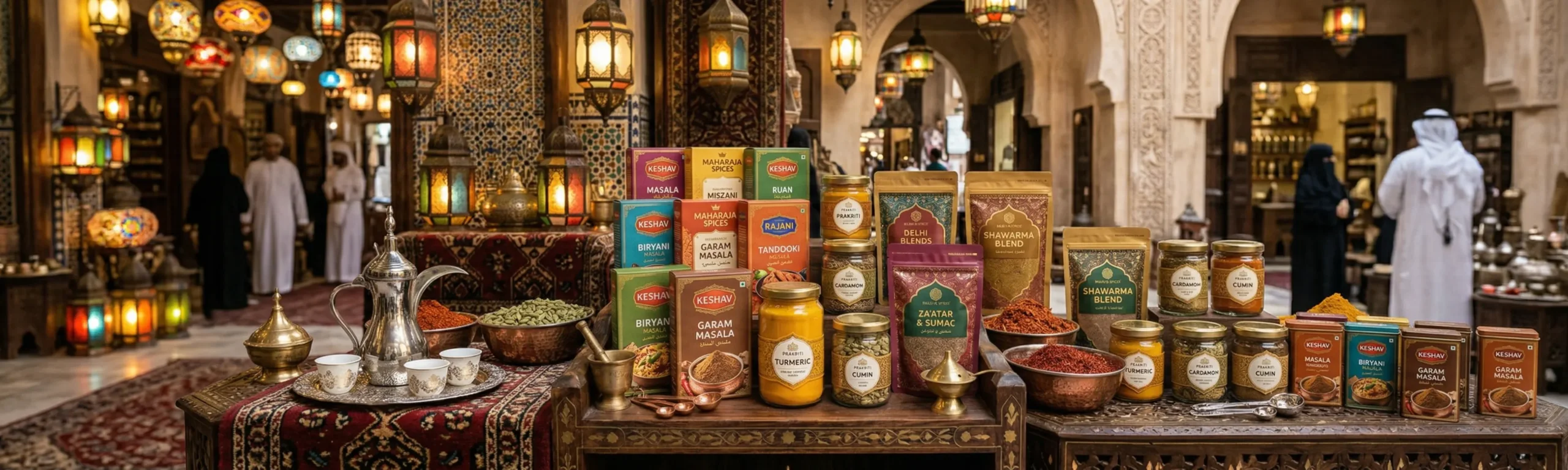
1. Understanding the Middle East Spice Consumer
The Middle East spice market is not one consumer. It is several distinct consumer groups, each with different relationships to Indian spices and different brand expectations.
Key consumer segments in Saudi Arabia and UAE:
- Indian and South Asian diaspora seeking authentic taste with premium presentation
- Arab households using Indian spices daily brand trust and quality assurance are paramount
- Premium food enthusiasts interested in single origin, artisanal, and premium spice stories
- Professional chefs and food businesses bulk quality with consistent specification
For most Indian spice brands targeting retail in Saudi Arabia and UAE, the primary and secondary segments are the first two diaspora and Arab households. Understanding what each segment values, and ensuring your brand communicates to both, is foundational strategy.
2. Packaging Design for Spice Retail in Saudi Arabia
Saudi Arabia’s organised retail sector led by Panda, Carrefour, Tamimi Markets, and the premium specialty chains in Riyadh and Jeddah has elevated its visual and quality standards dramatically in recent years. The Vision 2030 retail modernisation programme has directly raised the bar for what packaging looks like on Saudi supermarket shelves.
Indian spice brands entering or expanding in Saudi Arabia must design packaging to a standard that respects this elevated retail environment. This means investing in quality printing and materials, integrating Arabic language with genuine typographic care, and building a visual identity that communicates premium and trustworthy above all else.
Saudi retail packaging non-negotiables:
- SFDA (Saudi Food and Drug Authority) compliance specific labelling requirements strictly enforced
- Arabic language full product information in Arabic, not just a small translation panel
- Halal certification prominently displayed, from a recognised certifying body
- Shelf life and storage information clear, compliant, and prominently positioned
- Country of origin ‘Product of India’ can be a positive signal when combined with premium design
3. The UAE Premium Spice Opportunity: A Different Market, A Higher Bar
While Saudi Arabia offers scale, the UAE and Dubai specifically offers premium positioning. The UAE’s cosmopolitan, affluent consumer base, combined with the world’s most competitive retail environment, makes Dubai the global proving ground for premium spice brands.
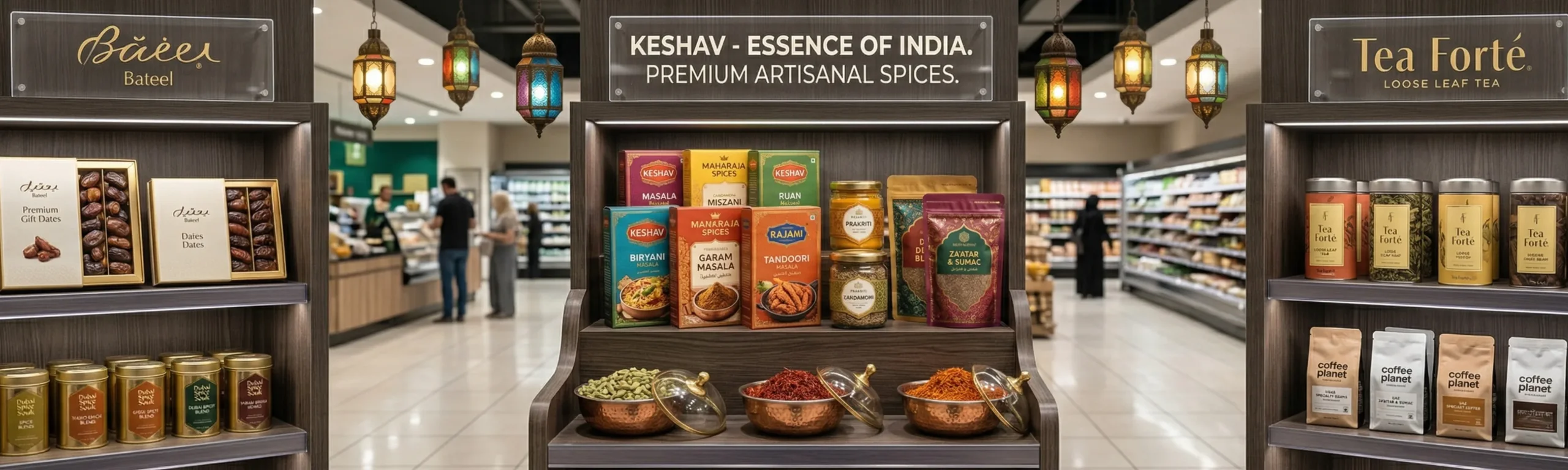
A spice brand that succeeds in Dubai’s Spinneys, Waitrose UAE, or the specialty food halls of Dubai Mall at a price point that reflects genuine premium positioning has proven something extraordinary: that Indian spice can command the same shelf space, the same price points, and the same consumer respect as the world’s most premium food brands.
This is achievable. We have seen it happen. But it requires building the brand to that standard from the ground up. Not adapting an existing domestic brand with a sticker, but creating an identity that was always designed for this level.
4. Single Origin and Artisanal Spice Brands: The Premium Opportunity
One of the most exciting brand opportunities in the Gulf spice market right now is the single origin, artisanal spice segment. As consumers globally become more food-literate and more interested in provenance, a spice brand that can tell a specific, authentic story Kashmiri saffron from a specific cooperative, Malabar black pepper from a single estate, Rajasthani coriander from a specific district has a compelling premium proposition.
In Dubai and Abu Dhabi, this kind of provenance storytelling resonates powerfully with the premium consumer segment. But it requires packaging and brand identity that can carry this story with the visual weight it deserves. A premium single-origin brand in a supermarket bag with generic typography tells no story. The same product in premium packaging with a designed origin story becomes a gift, a conversation, a brand that people share.
5. Building a Spice Brand Family: From Core to Premium
The most strategically successful Indian spice brands in the Gulf operate across multiple tiers a mainstream tier for everyday cooking needs, and a premium tier for gift giving, special occasions, and the premium retail channel. This tiered brand architecture allows a single company to maximise both volume and margin.
Building this kind of tiered architecture requires deliberate brand design decisions from the beginning. The premium tier must look genuinely premium not just a more expensive version of the mainstream tier. It requires its own visual identity system, its own packaging format, its own story. At Richest Branding, we design these brand families as integrated systems, where each tier enhances the credibility of the others.
6. Your Spice Brand Deserves a Story the World Will Remember
India gave spices to the world. The maritime spice routes that shaped global history were driven by the extraordinary quality and desirability of Indian spices. That heritage is yours. It is your brand story’s foundation and it is a foundation that is as powerful in Riyadh and Dubai as it is in Mumbai and Ahmedabad.
The question is not whether your spice brand has a story worth telling. It does. The question is whether your packaging, your brand identity, and your market positioning are telling that story with the confidence and quality that the world’s most valuable spice market demands. At Richest Branding, we build the brands that tell it right.
Ready to Build a Brand That Builds Empires?
Strategy • Design • Impact
www.richestbranding.com | info@richestbranding.com
Richest Branding — Strategic Branding that Builds Empires

