
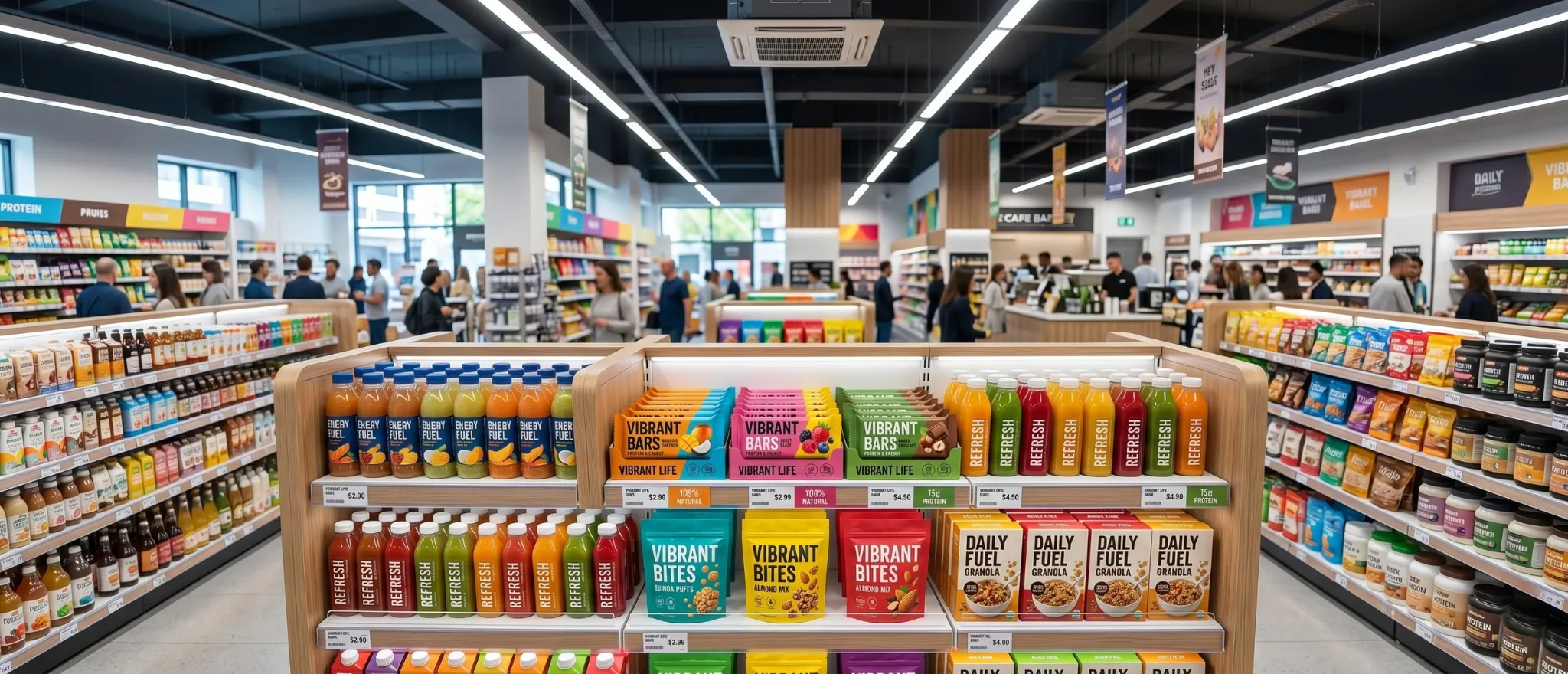
The 3 Second Rule: How Strategic FMCG Packaging Design Wins the Shelf Before the Consumer Thinks
April 14, 2026The 3 Second Rule: How Strategic FMCG Packaging Design Wins the Shelf Before the Consumer Thinks
Three seconds. That is the window your FMCG packaging has to register, communicate, and compel a purchase decision in a modern retail environment. Not three minutes. Not three interactions. Three seconds and in a hypercompetitive aisle, often less.
Consumer research conducted across modern trade formats in India, the UAE, and Australia consistently shows that the majority of FMCG purchase decisions are made at the shelf. Not at home, not influenced by advertising, not driven by brand loyalty. They are made in the moment, by a consumer whose attention you have borrowed for less time than it takes to read this paragraph.
This is the commercial reality that every FMCG brand in India must build its packaging strategy around. And it is why packaging design is not a finishing detail in the product launch process it is one of the most commercially critical decisions a brand makes.
Why Most Indian FMCG Packaging Loses the Shelf Battle
The most common failure mode in Indian FMCG packaging is not poor design it is design that serves the brand owner’s preferences rather than the consumer’s perception. The brand owner knows exactly what is inside the pack. The consumer does not. The packaging must communicate the product’s nature, quality, and differentiation to someone who is simultaneously processing dozens of competing visual signals.
When packaging is designed from the inside out starting with what the brand wants to communicate the result is often overcrowded, visually competing with itself, and failing to land a single clear message. When it is designed from the outside in starting with what the consumer needs to see, feel, and understand the result is clean, confident, and effective.
The Five Design Decisions That Determine Shelf Performance
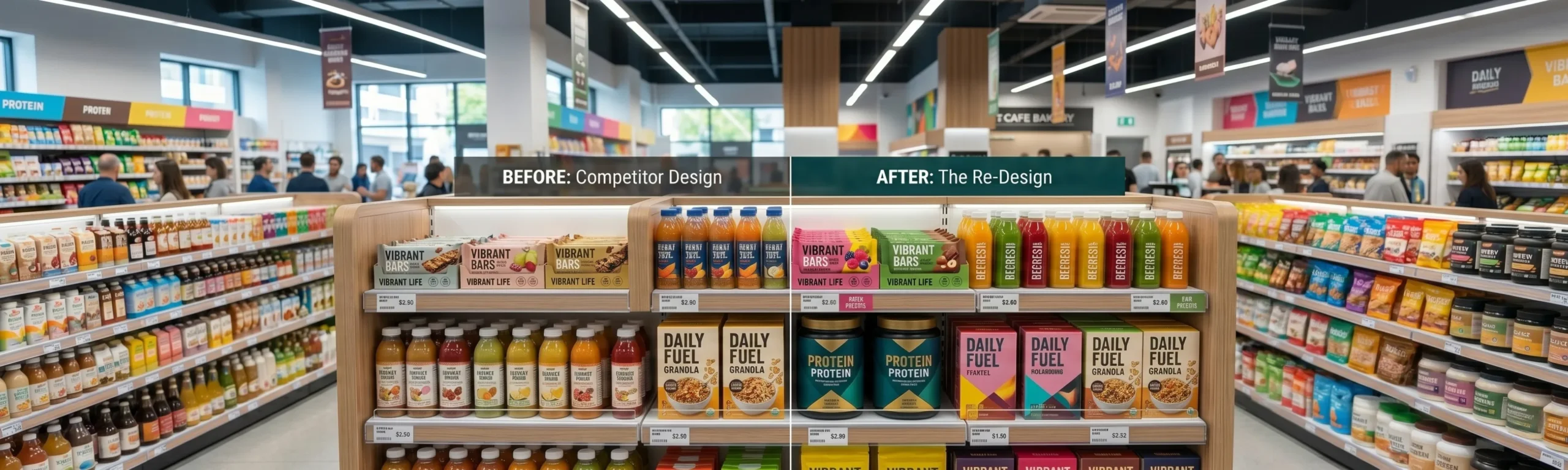
1. Colour as the First Signal
Colour is the fastest communication channel available to packaging design. Before typography is read and before imagery is processed, colour communicates category, quality, and emotional tone. The consumer’s brain categorises premium, value, healthy, indulgent, or natural primarily through colour before any other element is processed.
The strategic question is not what colour does the brand like but what colour does the category use, what does our target consumer associate with our promise, and how do we stand out from the adjacent products on the shelf without breaking the category code so completely that we become unrecognisable. Colour strategy in FMCG packaging is a precision discipline, not an aesthetic preference.
2. Typography Hierarchy That Communicates in One Glance
An FMCG pack must communicate a minimum of three things in the consumer’s three second window: what the product is, who makes it, and why this variant specifically. This requires a rigorous typographic hierarchy the brand name at the dominant size, the product descriptor at the secondary size, and the variant or flavour identifier at the tertiary size.
The most common typographic error in Indian FMCG packaging is size competition: multiple text elements at similar sizes, creating visual noise instead of visual hierarchy. The consumer’s eye does not know where to land. The three second window closes without a decision made.
3. Imagery That Makes the Product Desirable
Food and beverage FMCG packaging lives and dies on appetite appeal the visceral, immediate, almost physical response a consumer has to a product image on pack. A photograph of a perfectly prepared dish. An illustration that communicates freshness, flavour, or warmth. A close up of the ingredient that communicates quality and provenance.
The investment in professional food photography for FMCG packaging is one of the highest return investments in the entire product launch budget. A pack with weak imagery loses appetite appeal to competitors who invested in professional food photography. The product inside may be identical. The pack tells a different story.
4. Structure as a Differentiation Tool
Beyond the printed surface, the physical structure of the packaging the shape, the form factor, the closure mechanism, the material feel communicates quality and differentiation in a way that print alone cannot.
A spice brand that moves from a flat sachet to a structured stand up pouch with a resealable zip communicates freshness, premium quality, and modern consumer understanding simultaneously. The product is unchanged. The packaging structure has repositioned the brand.
5. The Back Panel Strategy
Most FMCG brands treat the back panel as a compliance exercise regulatory information, nutritional data, barcode. The brands that build genuine consumer relationships treat the back panel as a brand storytelling opportunity.
The ingredient sourcing story. The founding philosophy. A recipe suggestion that demonstrates the brand’s understanding of how the product is actually used. These are the brand equity builders that convert a first purchase into a repeat purchase.
Modern Trade vs General Trade Packaging
Indian FMCG brands operating across both modern trade supermarkets, hypermarkets, organised retail — and general trade — kirana stores, local chemists, neighbourhood provision stores face a specific packaging challenge: the same pack must perform in radically different retail environments.
- Modern trade: bright lighting, organised category blocking, consumer browses independently without shopkeeper influence
- General trade: lower lighting, cluttered display, shopkeeper recommendation carries significant weight, pack must be legible at 1 to 2 metre distance across a crowded counter
- E commerce thumbnail: pack must be identifiable and desirable as a small image on a mobile screen
- Social media shareability: premium packs get photographed and shared by consumers, making packaging organic brand content
A packaging strategy that optimises for only one of these contexts and ignores the others is leaving distribution reach and brand equity on the table. The best FMCG packaging in India is designed to perform across all four contexts simultaneously.
Your packaging is your most prolific salesperson. It works every hour of every day, in every store your product reaches. The investment in getting it right is not a cost it is the foundation of your sales infrastructure.
Ready to build a brand that commands your market?
Visit richestbranding.com | info@richestbranding.com

