Why Your Pitch Deck Is a Brand Document: How Indian Startups Build Investor Confidence Through Branding

Every Indian startup founder who has sat across a table from a serious investor knows the feeling: the product is compelling, the market opportunity is real, the team is strong and something is still not landing. The meeting ends politely and the follow up never comes.
Often, the missing variable is not the business. It is the brand.
Investors — whether angel investors in Ahmedabad, Series A funds in Bengaluru, or growth equity in Singapore are evaluating dozens of companies simultaneously. The cognitive shortcut they use, whether consciously or not, is brand quality as a proxy for management quality.
A startup whose pitch deck, website, product interface, and brand materials communicate precision and intentionality is telling the investor something before a single slide is presented: the people running this company pay attention to detail. They think about how they show up. They invest in quality. These are the same qualities that will build a category-defining company.
The Four Moments Where Startup Brand Quality Determines Outcomes

The Cold Introduction
Most investor relationships begin with a cold introduction an email, a LinkedIn message, a WhatsApp forward from a mutual contact. The first thing the investor does is Google the company name.
In the ten seconds they spend on the website, LinkedIn page, and any media coverage, they form a brand impression that will colour every subsequent interaction. A startup whose digital brand presence communicates world class from this first encounter has already differentiated itself from the majority of companies that reach the same inbox.
The Pitch Deck
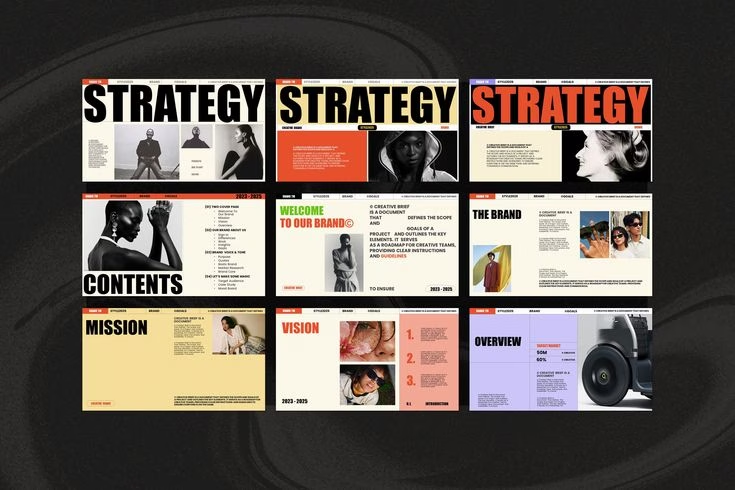
A pitch deck is a brand document. Every design choice the typography, the colour system, the information hierarchy, the quality of the charts and data visualisation, the photography communicates something about the founders’ standard of thinking.
The pitch decks that get follow-up meetings are not necessarily the ones with the best business metrics. They are the ones where the business metrics are communicated with the quality, clarity, and intentionality that makes the investor want to know more. The deck is the brand’s first detailed expression. It must be equal to the company’s ambition.
The Due Diligence Phase
When a serious investor moves into due diligence, they examine the entire brand ecosystem: the product interface, the customer-facing communication, the team’s LinkedIn presence, the sales collateral, the marketing materials.
Inconsistency at this stage is a red flag. A startup whose pitch deck is world-class but whose product interface looks unfinished, or whose sales materials use a different visual language, signals that the brand quality in the pitch was a one time investment, not an expression of organisational standards.
The Post-Investment Brand
After investment closes, the brand continues its work attracting the next round, recruiting senior talent, winning enterprise customers who evaluate suppliers with the same rigour that investors do. The startup that builds a brand system from the beginning, rather than polishing for each fundraise individually, compounds brand equity across every phase of growth.
What Investor Grade Startup Branding Requires
- A logo and visual identity that is distinctive, scalable, and communicates the category the startup is competing in
- A website that functions as an investor brief market size, differentiation, traction, and team credibility visible within 30 seconds
- A pitch deck design system not just a deck, but a visual language that can be extended to one-pagers, teaser emails, and data room materials
- A LinkedIn presence for founders and the company that is consistent, credible, and actively communicating thought leadership in the category
- Product or service visual quality that matches the pitch’s promise the gap between brand and product is the most expensive gap in startup fundraising
The Bengaluru and Ahmedabad Startup Moment
India’s startup ecosystem is at an extraordinary inflection point. Bengaluru has established itself as one of Asia’s premier startup hubs. Ahmedabad is producing an increasing number of capital efficient, market-smart startups across FMCG, healthcare, edtech, and fintech.
But the average standard of brand and design quality in Indian startup pitching remains significantly below the global benchmark particularly when competing for attention from Singapore or US-based investors who are simultaneously evaluating Southeast Asian and European deals.
The Indian startup that invests in brand quality at the same standard it invests in product quality is not spending on aesthetics. It is investing in the signal quality that determines how seriously it is taken at every stage of its growth trajectory.
Ready to build a brand that commands your market?
Visit richestbranding.com | info@richestbranding.com