
The Rebranding Playbook: How Mumbai’s Boldest Companies Reinvented Their Identity
April 4, 2026Every Successful Brand Eventually Faces the Same Moment
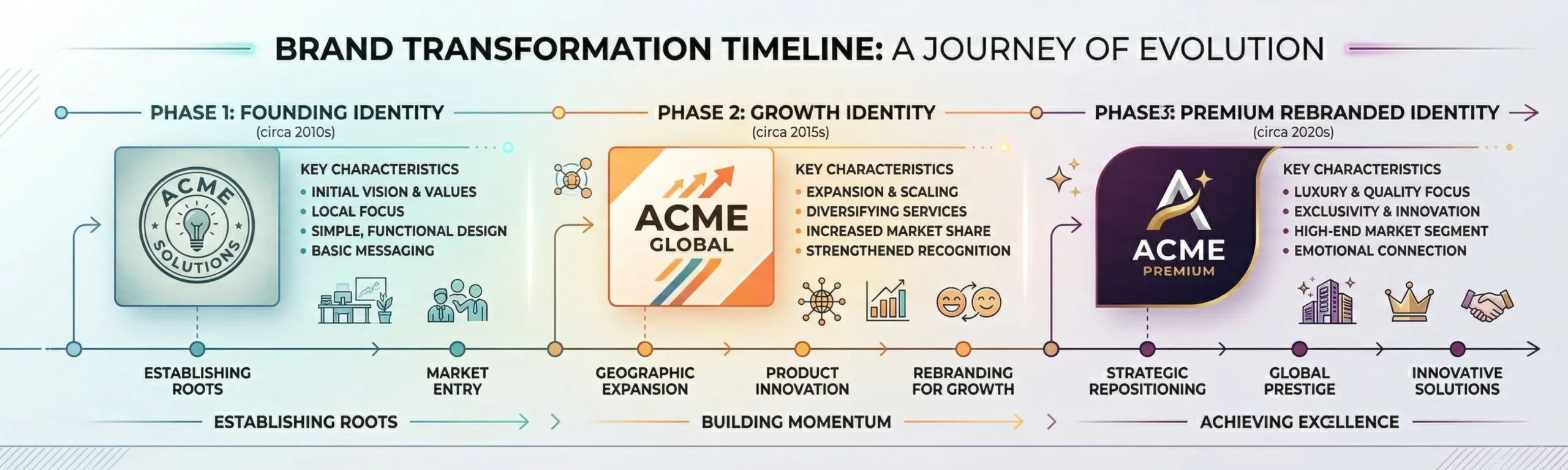
There comes a point in every successful business’s life when the brand that served it well in the beginning starts holding it back. The logo that felt exciting at launch now feels dated. The colour palette that once felt fresh now blends into the competition. The brand identity built on a tight startup budget is being asked to represent a company that has grown far beyond its origins.
This is the rebranding moment. And how a company handles it determines whether it moves to the next level of growth or stalls at the ceiling of what its current brand allows it to achieve.
In Mumbai’s hypercompetitive business environment, we have seen this pattern play out across every industry from FMCG and food brands in Dharavi’s production corridors to technology companies in Lower Parel’s co working towers, from family businesses in Mulund to export manufacturers in Bhiwandi. The ones who rebrand strategically emerge stronger. The ones who avoid it or rush it pay a heavy price.
1. What Triggers a Successful Rebranding: The Right Reasons vs the Wrong Ones
Rebranding is a significant investment of time, money, and organisational energy. It should not be undertaken reactively, impulsively, or for cosmetic reasons alone. The most successful rebrands are triggered by genuine strategic shifts in the business.
Right reasons to rebrand:
- The business has fundamentally evolved new category, new audience, new price point
- A merger, acquisition, or partnership requires identity consolidation
- The brand is genuinely confused with a competitor or carries negative associations
- International expansion requires an identity that travels beyond India
- The current brand is preventing access to premium channels, partners, or investors
Wrong reasons to rebrand:
- Boredom with the current logo at the leadership level
- A competitor rebranded and it created reactive pressure
- A new marketing manager wants to make their mark
2. The Risk That Paralyses Business Owners And How to Manage It
The single biggest fear that stops Mumbai business owners from rebranding when they should is this: will I lose the recognition and loyalty I have spent years building? This is a legitimate concern that deserves a strategic answer not dismissal.
The answer is brand equity mapping. Before any design work begins, we systematically identify every element of the current brand that carries genuine consumer equity the elements that consumers recognise, associate with, and rely on. These are protected throughout the rebrand. Everything else can evolve freely.
This approach which we use at Richest Branding on every rebranding project allows the brand to make a dramatic visual leap while maintaining the thread of continuity that existing customers need to follow the journey without losing confidence.
3. The Rebranding Process: Seven Stages That Must Not Be Skipped
- Brand Audit document every current brand expression and evaluate equity levels
- Competitive Landscape Analysis understand where every competitor is positioned visually
- Strategic Brief define the new positioning, audience, and brand personality precisely
- Concept Development explore multiple identity directions before committing
- Stakeholder Validation test concepts with internal teams, key customers, and channel partners
- Brand Standards Development build the guidelines that govern the new identity
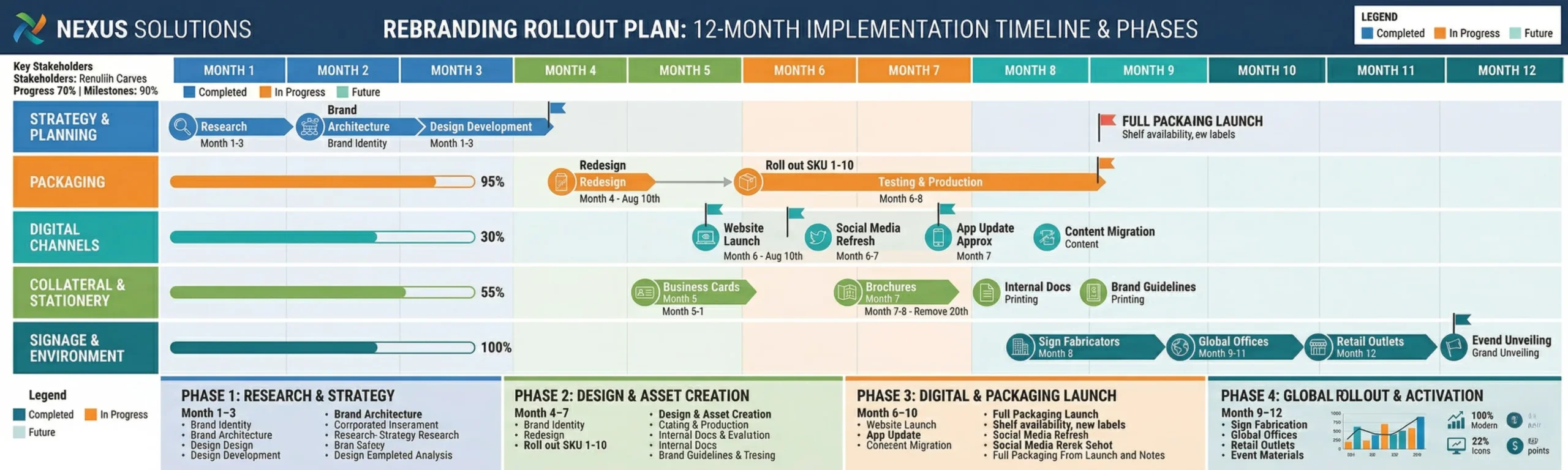
- Phased Rollout Planning sequence the changeover to minimise disruption and maximise impact
Skipping any of these stages particularly the audit, the brief, and the rollout planning is how rebranding projects go wrong and expensive. The stage that is most commonly skipped, to devastating effect, is the rollout planning. A brand that is rebranded brilliantly but rolled out inconsistently delivers a fraction of its potential value.
4. Rebranding Legacy Businesses: The Mumbai Family Business Challenge
Some of Mumbai’s most interesting rebranding challenges come from family businesses navigating generational transition. A second or third-generation business owner inheriting a well known but visually dated brand faces a unique challenge: honouring the heritage that built the business while repositioning it for contemporary relevance.
This is a deeply human process, not just a design process. It requires conversations about values, pride, identity, and ambition. At Richest Branding, we bring the sensitivity and strategic rigour that these conversations require. The goal is always a brand that the founding generation is proud of and the new generation is excited to build.
5. Measuring Rebranding Success: The KPIs That Matter
- Brand recall lift measured through consumer research before and after rebranding
- Price point elasticity can the rebranded product command a higher price without resistance
- Channel access improvement are premium retailers and distributors now more receptive
- Talent attraction quality are better candidates applying to join the company
- Stakeholder pride metric the intangible but real measure of how team members feel about representing the brand
6. Why Richest Branding Leads Mumbai’s Most Important Rebrands
Rebranding is the most complex and high stakes project in brand design. It requires the strategic depth to understand a business’s full history and future ambitions, the design excellence to create an identity that is both evolved and fresh, and the project management rigour to execute a complex, multi-touchpoint transition without disruption.
At Richest Branding, rebranding is not a service we offer as an add-on. It is a core discipline one we have honed across industries, company sizes, and market contexts. When a Mumbai company is ready to become what it was always capable of being, we are the partner that makes the transformation visible.
Ready to Build a Brand That Builds Empires?
Strategy • Design • Impact
www.richestbranding.com | info@richestbranding.com
Richest Branding — Strategic Branding that Builds Empires

