
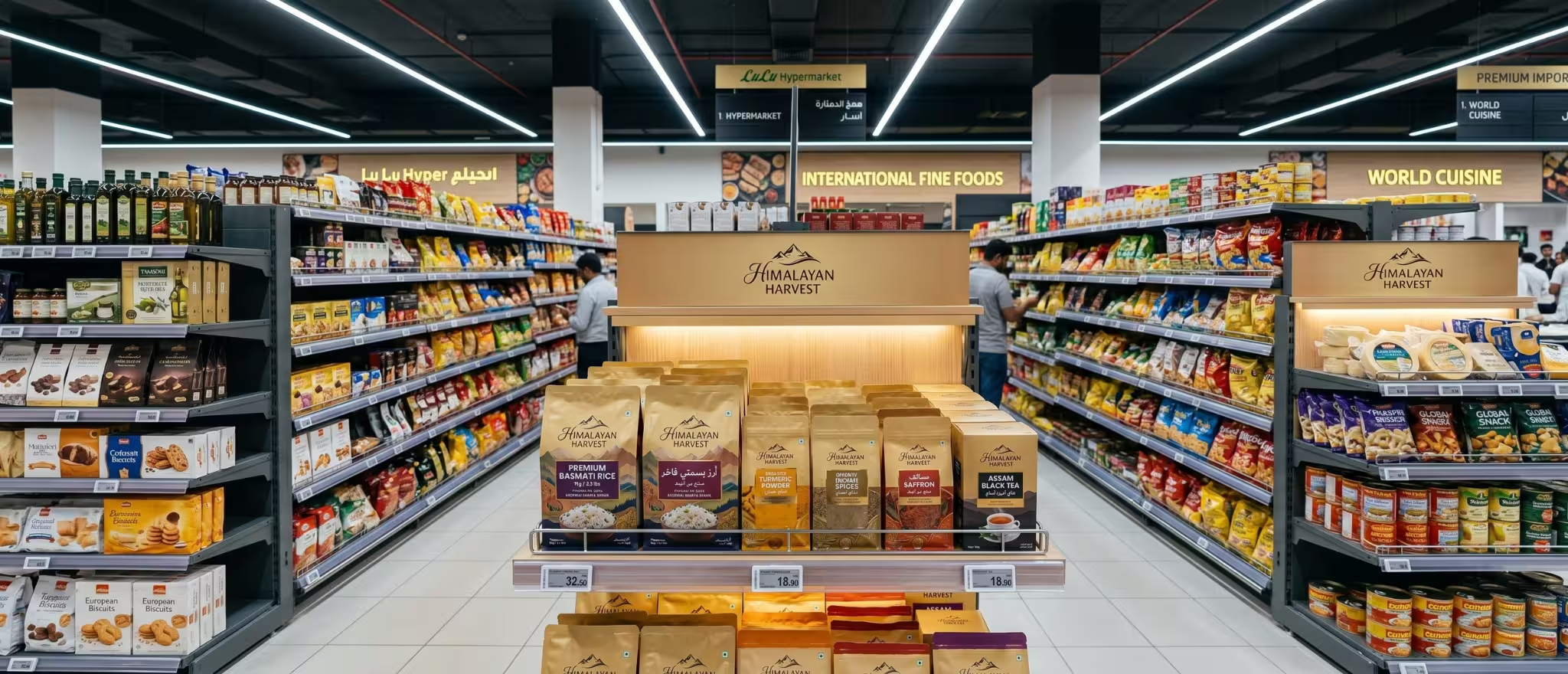
Built for the World: How Indian Brands Design Export Quality Packaging That Earns International Shelf Space
April 23, 2026Built for the World: How Indian Brands Design Export Quality Packaging That Earns International Shelf Space
Every year, Indian brands with genuinely exceptional products spices, skincare, nutraceuticals, beverages, snacks attempt to enter international retail markets in the UAE, Saudi Arabia, Singapore, Australia, the UK, and Germany. A fraction succeed. The majority do not.
The product is rarely the problem. India produces food, skincare, and consumer goods at a quality standard that compares favourably with the best in the world. The problem almost universally in the failed export attempts we have audited at Richest Branding is the packaging.
Export quality packaging is not simply packaging that meets international regulatory requirements. It is packaging that meets the visual, material, and brand communication standards of the international retail environment it is entering. These are two very different things. And confusing them is the most expensive mistake an Indian brand can make in its export journey.
What International Retail Buyers Actually Evaluate
When a category buyer at Carrefour UAE, Lulu Hypermarket, Cold Storage Singapore, Woolworths Australia, Sainsbury’s UK, or a Whole Foods regional buyer in the USA reviews a product submission from an Indian brand, they are making a holistic evaluation that goes far beyond regulatory compliance.
They are asking: does this brand look like it belongs on a shelf next to the brands our customers already trust? Is the packaging quality consistent with the price point being proposed? Is the brand identity strong enough to build consumer recognition over multiple purchase cycles? Are the regulatory requirements for our specific market met completely and correctly?
The Indian brands that earn these placements consistently do one thing differently from the brands that do not: they design for the specific market from the start, not after the domestic design is finalised.
At Richest Branding, our export packaging work begins with market research into the specific retail environment the brand is targeting. We study the shelf: who are the brands already there, what are the design conventions of the category in that market, and what would make our client’s product both compliant and distinctive in that specific retail context.
The International Packaging Standards Every Indian Export Brand Must Meet
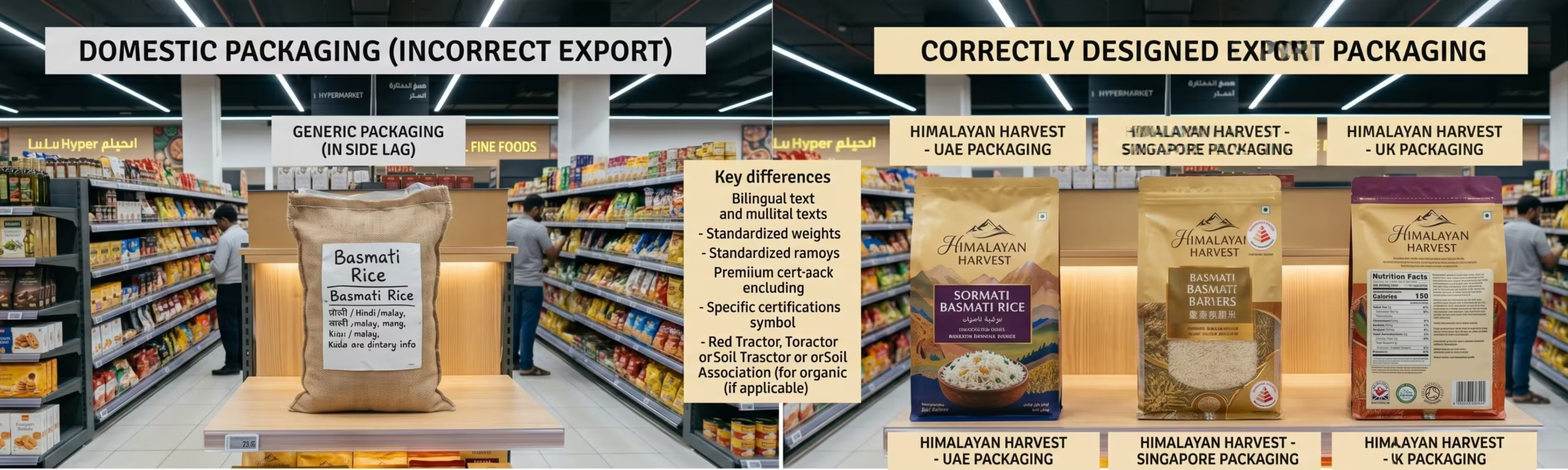
UAE and Saudi Arabia
The Gulf retail market is one of the most accessible and highest value export destinations for Indian brands. The Indian diaspora is enormous. The demand for Indian food, spices, and beauty products is sustained and growing. But the regulatory and visual requirements are specific.
- Arabic language: all key information product name, ingredient list, nutritional information, usage instructions — must be in Arabic, designed as part of the label, not added as a sticker
- Halal certification: prominently displayed with the certifying body identified not a generic Halal text statement
- SFDA registration for Saudi Arabia: required before the product can be listed in modern trade
- Country of origin: clearly stated Made in India is a positive differentiator in Gulf markets, not something to minimise
- Net weight in metric units with both English and Arabic labelling
Singapore and Australia
Singapore and Australian retail buyers have among the most rigorous packaging standard expectations of any export market for Indian brands. Both markets have large Indian diaspora communities but also mainstream retail buyers evaluating Indian products alongside Korean, Japanese, and European equivalents.
- Singapore AVA compliance: all food and cosmetic products require specific labelling format, ingredient declaration, and shelf life communication
- Australia FSANZ and TGA: strict nutritional labelling formats, allergen declaration requirements, and for nutraceuticals, therapeutic goods registration where applicable
- English must be the primary label language in both markets translations are secondary
- Photography and imagery standards: no misleading serving size or results imagery
- Barcode format: GS1 compliant barcodes are mandatory for modern trade listing in both markets
UK, Germany, and the European Union
The UK and EU markets represent the most sophisticated and brand conscious consumer environments for Indian export products. The premium and speciality food, beauty, and wellness segments in these markets are actively seeking authentic, provenance led Indian products but the packaging standard required is exceptionally high.
- UK labelling: post Brexit UK specific regulations for allergen labelling, nutrition declaration, and country of origin apply separately from EU rules
- EU General Food Law and Cosmetics Regulation: comprehensive requirements for both food and cosmetic categories
- Language requirements: primary language of the destination country required on front of pack in the EU
- Sustainability credentials: recyclability and environmental labelling is increasingly mandatory and always a consumer expectation in these markets
The Shelf Competitor Design Study: How Richest Branding Builds Export Winning Packaging
One of the most valuable services Richest Branding provides to brands preparing for international market entry is a shelf competitor design study. Before any export packaging design work begins, our team conducts a structured analysis of the target market’s retail shelf.
We identify the existing brands in the category, analyse their packaging design language, understand the visual conventions that communicate trust and quality in that specific market, identify the gaps the positions on the shelf that are not yet owned and design our client’s packaging to occupy a distinctive and defensible position in that specific competitive context.
This is not a theoretical exercise. It is a practical, market specific design process that produces packaging designed to win on a specific shelf, against specific competitors, for a specific consumer. The difference between this approach and designing export packaging based on the domestic design alone is the difference between packaging that earns shelf placement and packaging that is politely declined.
International Market Positioning Begins at the Packaging Brief
Market positioning the specific place a brand occupies in the consumer’s mind relative to the competitors available to them is communicated most powerfully through packaging. In an international retail context where the consumer has no pre existing relationship with an Indian brand, the packaging is the entire brand communication.
The Indian skincare brand that enters the Singapore market must be positioned clearly premium Ayurvedic, clinical efficacy, natural and sustainable, accessible and everyday before the packaging design begins. The positioning determines every design decision. Without it, the packaging is a guess. With it, the packaging is a strategy.
At Richest Branding, we have helped brands across FMCG, skincare, nutraceuticals, spices, and beverages build international market positions that began at the packaging brief and were validated by the international retail placements that followed. The practical knowledge our team has built across these markets is the foundation that every export packaging engagement is built on.
Ready to build a brand that commands your market?
Visit richestbranding.com | info@richestbranding.com

